TFR GUIDE to Choose the Right Floating Dock Type
Water Conditions, Intended Use, Lifespan & Design
Choosing a floating dock isn’t just about adding a floating platform to your shoreline. It’s about making a smart investment, improving access to the water, and ensuring long-term durability in constantly changing conditions.
If you're researching how to choose a floating dock, you're likely trying to answer one big question: What will work best for my property and hold up for years? This guide breaks down exactly what to consider before making that decision.
Considering a Floating Dock? Consider these first..
What is the main challenge this floating dock will solve?
Identifying this first will ensure you choose a dock system capable of its key challenges. This could be a steep drop in depth, seasonally receding of water, severe depth fluctuation or winter removal. It could be the flexibility to scale, redesign layouts, dry-dock watercraft or easily move the dock along the waterfront.
What is the water-body like where the floating dock will reside?
The location of the dock often makes some of the decisions for you. What type is the body of water? Fresh water or salt, lake, river, pond, seaside or inland channel? What is the depth of the water and is it consistent or does it fluctuate with regularity?
Secondly, what kind of bottom is it? Sandy, rocky, deep mud, gravel or a combination of these? The behaviour of the water and its bottom consistency will give you the info for the next consideration.
What is the shoreline like where the floating dock will reside?
The shoreline may include an existing dock or platform that you want to utilize as an existing extension. The shape, height and length of the shoreline will impact what can and cannot be done.
With this detail and the location info, you can assess the type of anchoring that would be required in your location. With a more challenging waterfront - the more versatile the dock and anchoring system will need to be.
What will the daily functions be for this floating dock system?
A floating dock’s on-water performance will differ by brand, design type and purpose. Some floating docks are exceptionally adept at dry-docking watercraft, while others prioritize platform security or a large catalogue of accessories.
Defining the primary use(s) for the dock will help narrow the options while keeping your on-water priorities
5 Steps to Assessing Your Waterfront for a Floating Dock

Water Movement ■ Water Bottom ■ Water Depth
The single most important element to choosing the right floating dock system is the environment it will inhabit. A waterfront assessment will provide you with insight about Dock Type, Anchoring, Durability and Functional requirements.
Floating Docks are designed to work with different environmental conditions. Matching the appropriate dock type to a waterfront is Step #1 in choosing the right Floating dock system.
How does water movement affect floating dock choice?
Water and Wind Direction
Prevailing water flow will require reinforced anchoring on the impacted side of the dock layout. Docks situated in river environments would be an example that would require an adapted anchoring structure to reinforce the side facing frequent impact.
Open Water Exposure
Floating docks situated in open water like coastlines or lake bays that take head-on impact, will require a heavier dock platform that can handle impact without sacrificing stability.
Watercraft Traffic Wake
Floating docks exposed to consistent wake - like those in canals or lake channels - must be able to absorb, deflect or allow this wake torque to pass through with minimal impact. They may also benefit from combination anchoring to maintain the dock position.
Water Chop & Whitecaps
Large water bodies with frequent wave action and chop can overtake the sides of a floating dock even with the active depth adjustment. If your waterfront receives head-on wave action, looking for a high float profile dock system.
How does the water bottom affect floating dock choice?
Deep Soft Muck and Silt
Water bottoms with a deep soft muck can be challenging for anchoring. It often means that a pipe anchoring system must be driven down deeper to reach the solid footing required. It also means the portion of the pipe in the soft layer of the muck will have play (movement), however minimally, that could affect stability.
Gravel Sand Mix
This type of bottom mix can appear tightly packed at the top (when you walk on it), but under this layer it may be less compacted in some areas. Bottoms like this can sometimes give a ‘false footing’ that can allow posts to work themselves loose. It’s important to dig down and test the consistency for hold potential.
Rocky Bedrock
Rocky bottoms are generally those in deep water environments. Large boulders and bedrock bottoms will rule out post anchoring as an option. While rocky bottoms occasionally have sandy breaks, the recommendations would be dead weights or shoreline stiff-arm anchoring.
Rugged Topography
Water bottoms with non-uniform topography can be tricky, but this is a challenge floating docks are designed to work around. Steep drop-offs or quick depth changes as the dock moves out into the lake can be handled with anchoring combinations or dock layout modifications to avoid problem areas.

How does the water depth affect floating dock choice?
This is where floating docks earn their reputation for problem solving; fluctuating water levels, tidal changes and receding bodies of water. Management of water level fluctuation is a key floating dock selling point. However, it’s important to note that level adjustment is not the same across designs and brands.
What do we mean? While floating docks are built to adapt to depth changes, it’s not always automatic. The anchor types used by each dock design will handle water level fluctuation differently.
Piling & Post Anchoring
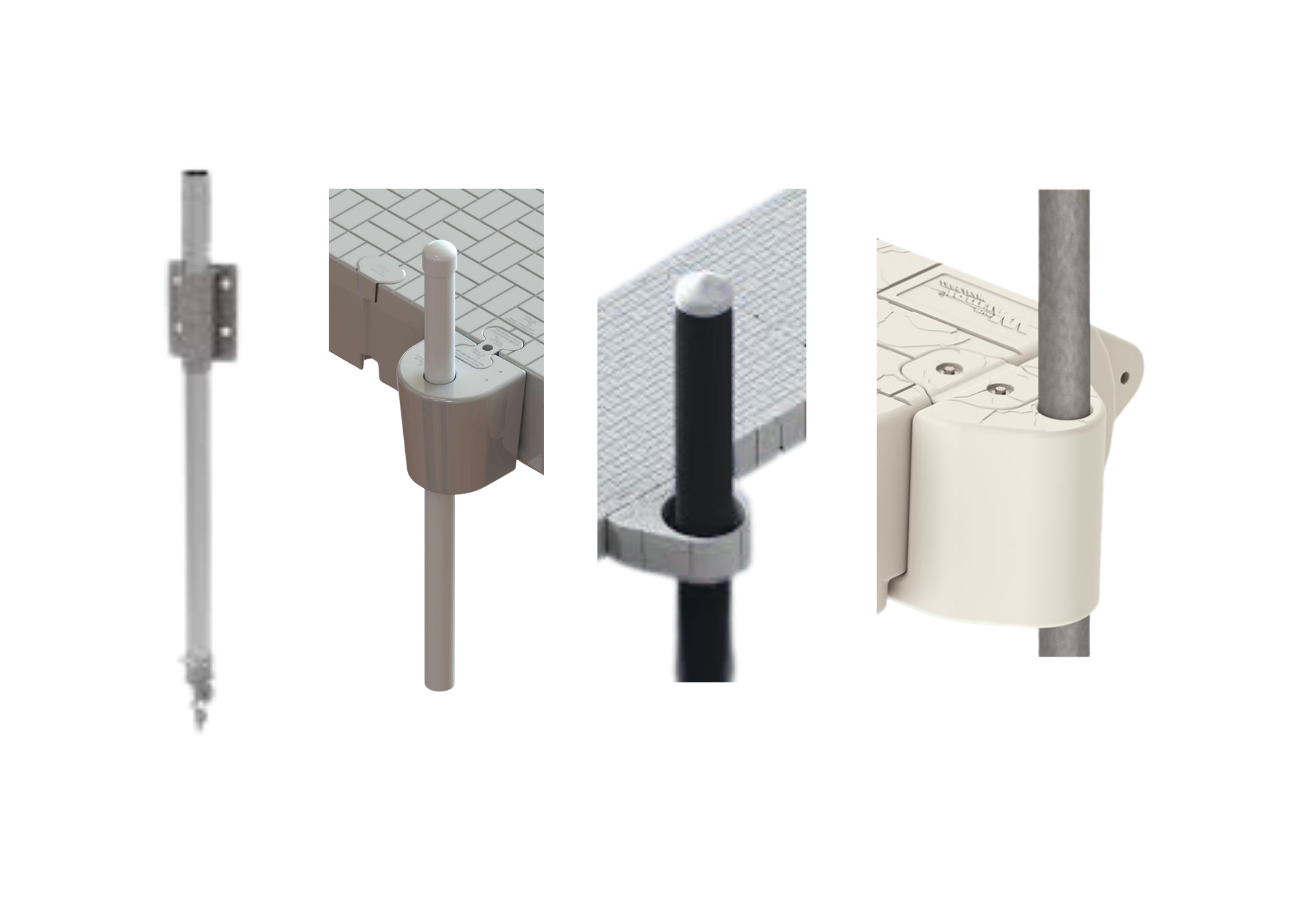
This type of anchoring is the most popular, and whenever possible - this is recommended. This is referred to as active response anchoring. Meaning the dock system will raise or lower as required without dock owner involvement. The post is situated in a bracket (sheath) that is connected to the dock. The entire platform (with posts around the perimeter) rises or lowers as the water level changes.
Stiff-Arm Anchoring
This type of anchoring is used when depth exceeds the functional depth for a post setup. This type is also considered active response, but it’s limited. Severe depth loss or receding water would challenge these.
Dead Weight Anchoring
For deep waters exceeding 20 ft (6.1 m) - dead weight anchoring is the only option. In most situations these are combined with other shoreline anchor types to stabilize side to side sway. Dead weight anchoring does not actively adjust to level change. Adjustments in chains to provide or remove slack, is necessary to maintain stability.
Floating dock systems can transform your waterfront by providing a stable platform that adapts to changing environments.
Now that you know what elements can impact dock performance and how to spot them - it’s time to perform a Waterfront Assessment. This will give you the information needed for all future dock choices.
How to do a Waterfront Assessment
-
Stake out the approximate position for your platform at the shoreline and in the water (if possible). Make it slightly larger than your platform to provide a buffer for measurements.
-
The platform size will determine how many are needed. A good recommendation is to take a measurement about every 4 ft (1.2 m). This will give you a good picture of the overall grade for where the dock will be positioned.
-
Unless you had to get in the water for the depth measurements, it’s time for an in-water assessment.
Inspect the water-bottom where your dock will be positioned. Check the consistency - can you dig your hand down deep, or is it solid? Is it weedy or relatively clear? The goal here is to assess for the possibility for post anchoring. -
In most cases there will be existing dock structures of some kind at the shoreline. You will need to determine if any part of this will be repurposed and incorporated within the new structure. Take measurements of how far it extends into the water and at what height. This will assist you in figuring out what type of adaptor kit will work.
With This
Dock Info
You’ll Know
Which Anchoring Type will likely work
Which design elements protect docks
Which anchoring designs automate depth changes


Watercraft Docking ■ Recreation ■ Removals
Now that the shoreline and waterfront have been assessed, Step #2 is to determine the functions for the dock system.
Every floating dock type and brand will vary in performance and capability. The intended use(s) will help you hone in on the docks that make sense for you.
How Will The Floating Dock Be Used?
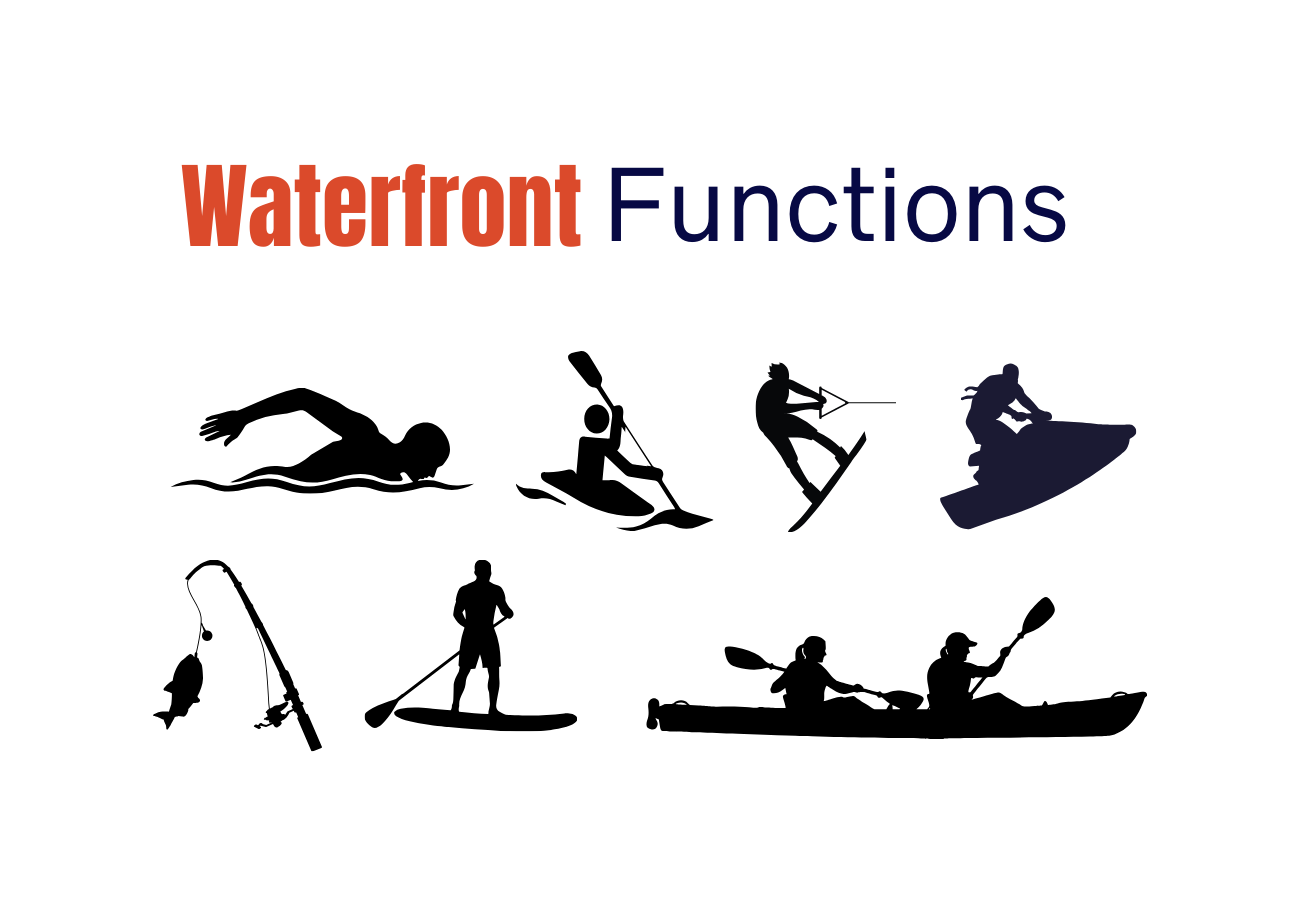
Watercraft Docking
Watercraft Launching
Changing Layouts
Movable Platform
Boat Access
Shoreline Living Space
Watercraft Storage
Events and Gatherings
Protected Boat Slip
Shoreline Gangway
Start by identifying the main activities, functions and expectations you have for this dock system. For each function or use - consider the features and performance capability required. The goal here is to figure out the best floating dock candidates (type and design) address your top priorities without sacrificing in other functionality.
Watercraft Ports, Docking, Launching
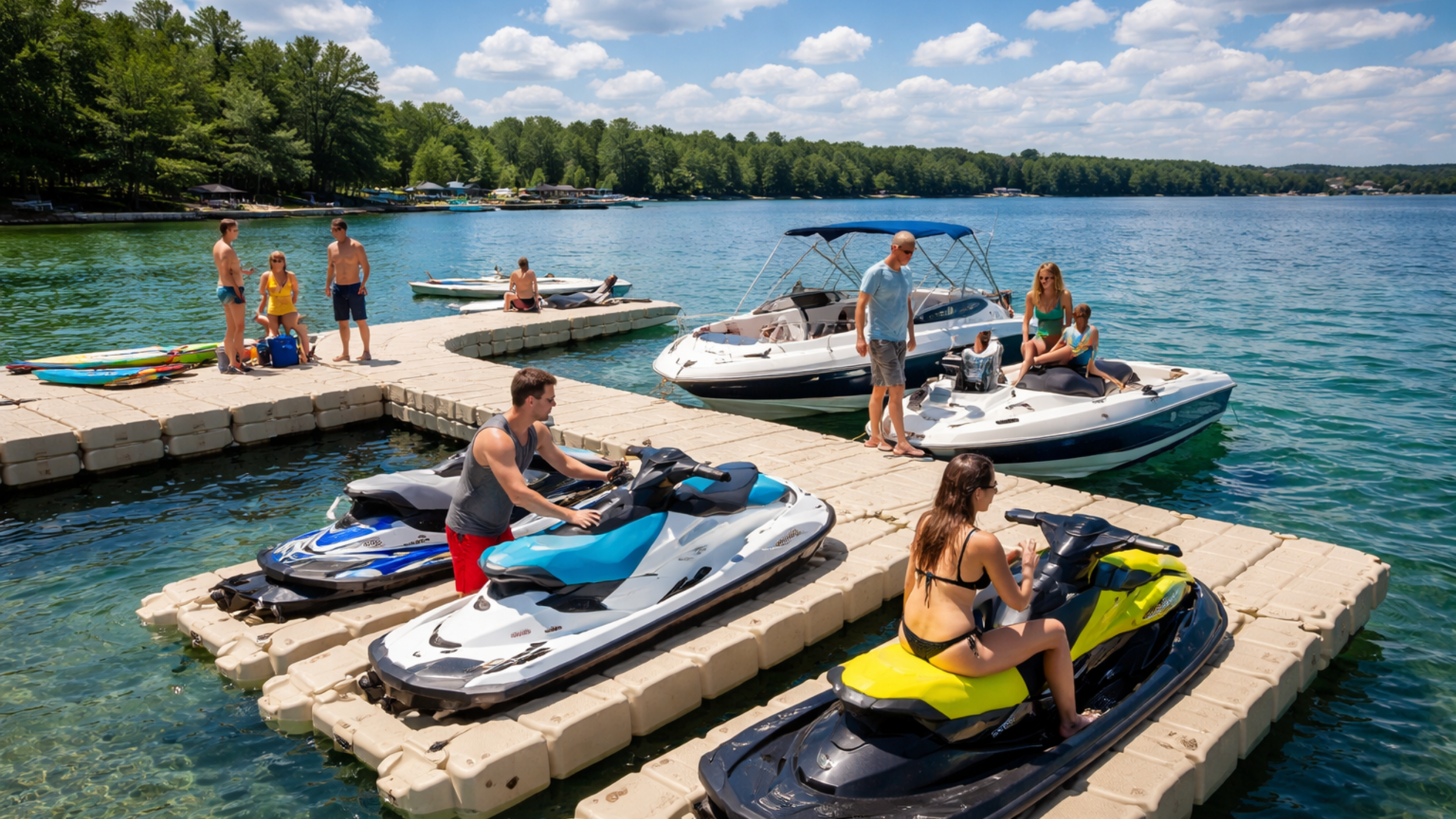
Watercraft Docking
Floating dock systems must be sturdy enough to withstand the force imposed by revving watercraft as they dock. Floating dock systems can house watercraft by way of cleat tie-downs, drive-on ports, boat lifts, and self propelled watercraft with slide-in port launches.
If watercraft docking will be a primary use for your dock system - make sure to consider:
■ The Float Profile and Water Stance (Freeboard height, Float Principle)
■ Type of Watercraft Ports, Lifts & Launches in the product line
■ Heavy duty anchoring and stabilizing options for additional weight tension on the dock
■ Docks built with materials that won’t scratch or scrape the sides or hulls of watercraft
Waterfront Activities & Recreation
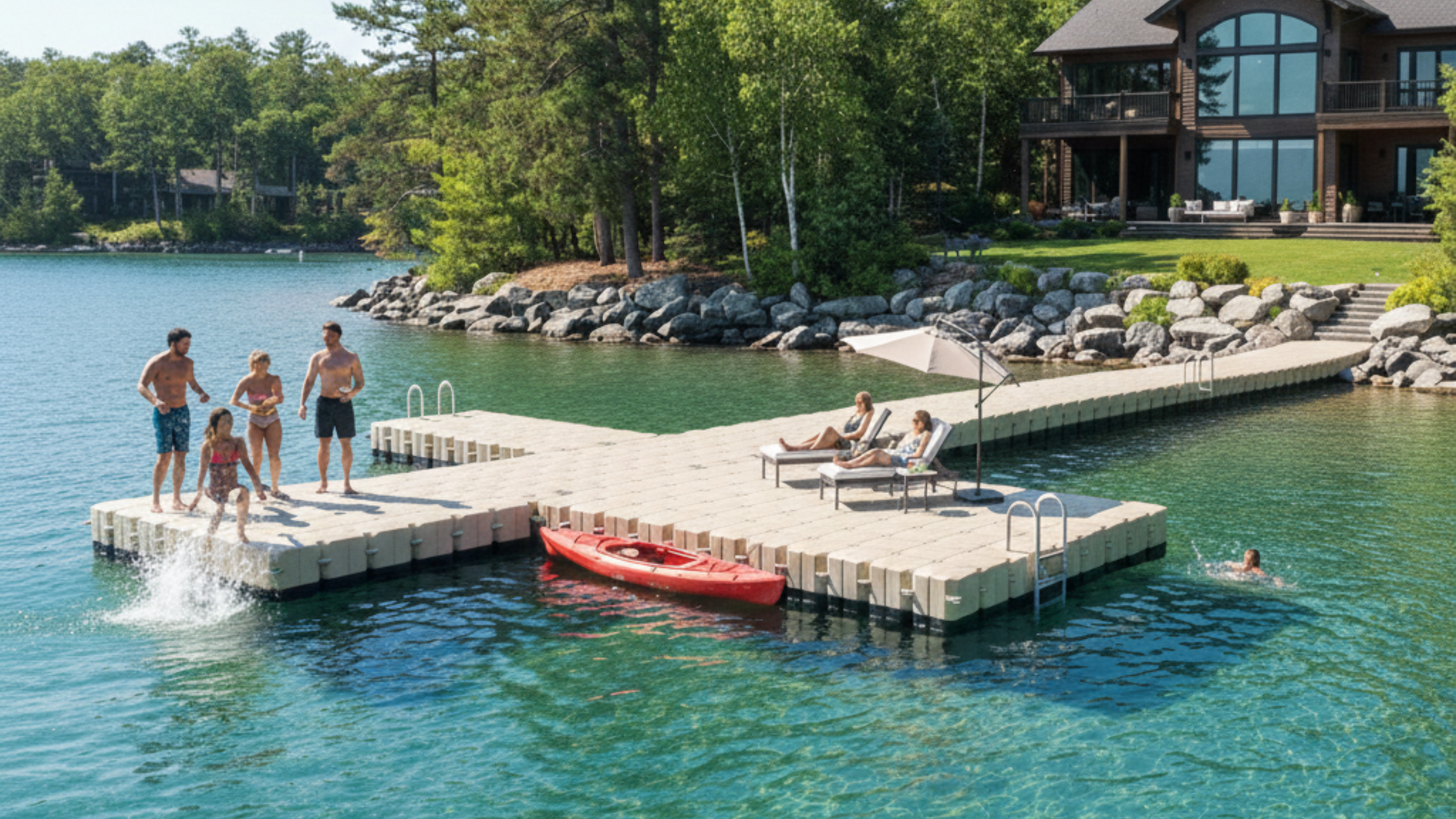
Accessibility & Safety
■ Dock designs that prioritize safety and access (non-slip platforms, ramps, railings etc)
■ Soft-Edge Perimeter: Moulded, rounded corners and recessed hardware (no protruding bolts) to protect shins and swimsuits.
■ Low Freeboard height that sits closer to the water for easier entry and exit for swimmers
■ Wide Walkways: Space for groups and coolers
■ Platforms with non-slip patterns for safe grip
■ Integrated Ladder: Smooth, flip-up water entry points
Outdoor Living
■ Utility Channels: Floating dock systems with enclosed electrical fed to the platform.
■ Floating Dock lines with functional accessory lines (storage, benches, ladders, lighting, etc)
■ Water diversion channels to keep the dock dry
■ Heat-Reflective Surface: Stays cool for bare feet
Removing & Moving Floating Dock Systems
The utility of floating dock systems is most often the initial attention-grabber. Modern floating dock platforms - weighing literal tonnes - can be moved in the water effortlessly to a new position, or removed for the season.
How does that work?
For waterfront owners facing consistent water level fluctuation, seasonal drawdown or winter season removal, floating docks offer a clever solution. If your dock begins to chase the water out into the lake as late summer approaches - you’ll know what we mean!
Floating dock systems with post anchoring can be moved in minutes by pulling up and pinning (suspending) the pipes within the bracket. The platform is then pushed or dragged to the new position and the pipes dropped and anchored.
Removals & Positioning
■ Look for dock systems that can be moved or repositioned without water entry
■ Can the dock be disassembled while on the water?
■ Look for Pipe (post) anchoring with a bracket assembly
■ Quick disconnect connectors are essential for headache free removals
■ Look for floating dock systems that offer platform wheel attachments for rolling removals
Floating dock systems offer exceptional problem solving and value on the water. Now that you know how to assess a shoreline and how this dock system will be used - it’s time to find out which floating docks can handle the job.
Step #3 takes us into dock design and capability. Now is the time to envision your floating dock layout in position to gauge feasibility and performance requirements.

Layout ■ Anchoring ■ Dock Type
The key to choosing a capable floating dock comes down to effectively matching function with environment and application. Now that you have assessed the waterfront and decided how it will be used, Step #3 is to:
■ Platform Layout
■ Anchoring Setup
■ Floating Dock Type
Floating Dock Layouts Design Considerations
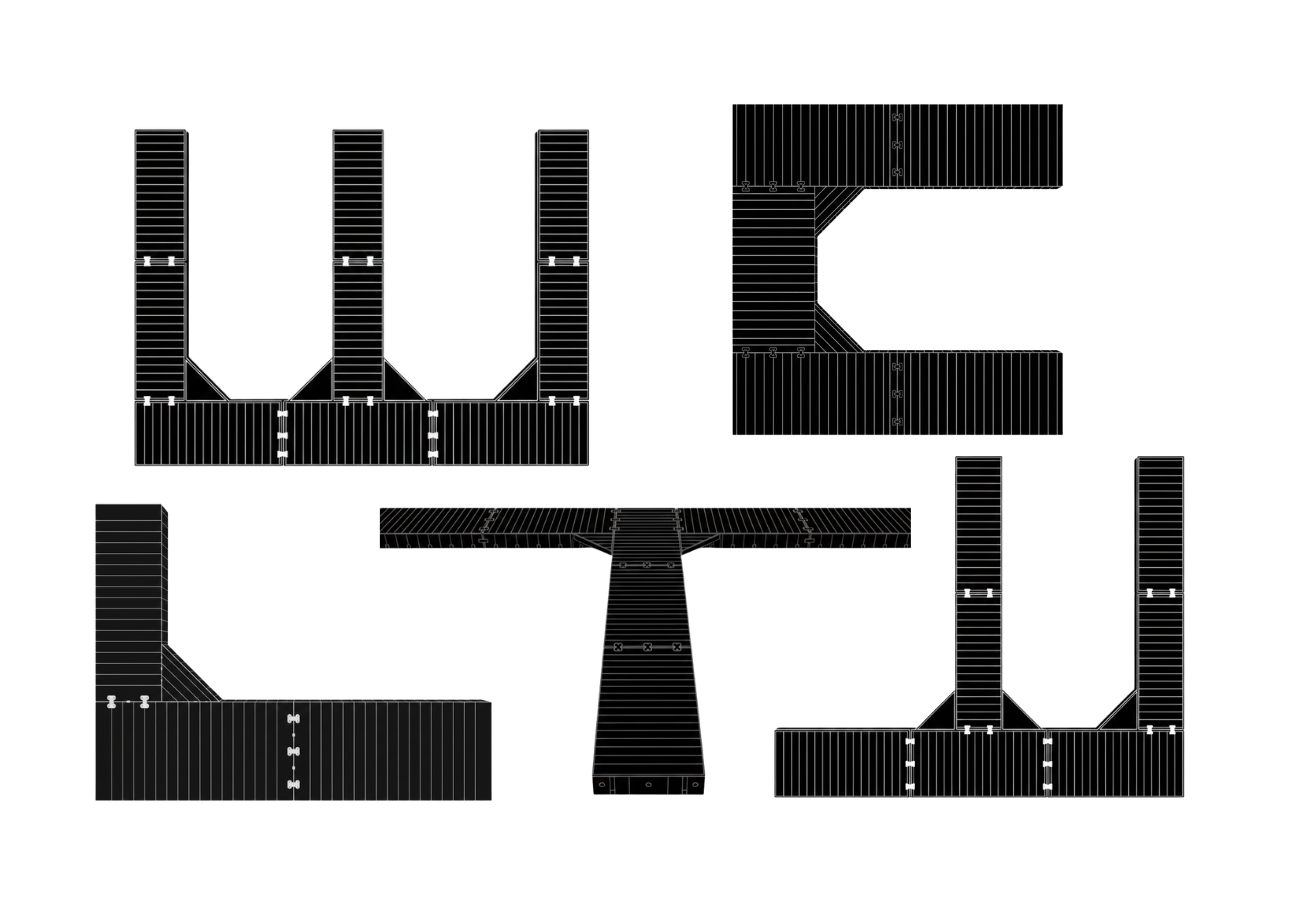
Floating Dock Layout
Deciding on the platform layout for your dock must consider everything discussed so far. The performance and function of the dock is directly impacted by the space it inhabits.
Just like the foundation of a house, the footprint of a floating dock system must be logical and functional for its purposes and surroundings.
DOCK
Layout
Consider these..
COMMON LAYOUT DESIGNS
■ T Shape
The T shaped dock layout is a sturdy and balanced dock platform layout. Optimal for boat docking and unloading of passengers at the top of the T. This design provides protected swim and wading areas either side of the access walkway.
■ F Shape
The F shaped dock layout is ideal for protecting one side against prevailing current and winds. This layout creates two protected boat slips and creates a swim area. This allows for controlled boat docking and protected launching and disembarking of passengers.
■ L Shape
The L shaped dock layout (aka the half T) is a standard design to create a protected activity side and a boat docking run on the other. The inside of the "L" creates a natural, sheltered cove with muted current and winds of the open water.
■ U Shape
The U shaped dock layout is the standard for boat protection and easy docking. For in-water boat protection this layout is hard to beat. It creates a calm and controlled slip that protects watercraft against three sides of impact, current and wake.
■ TT Double Stacked Shape
The vertically double stacked T dock shape creates a platform at the top of the run while keeping watercraft protected in slips on both sides. This makes room for 4 boats to be slipped in the calm waters behind the platform at the top of the layout.
TRAFFIC FLOW & WALKWAYS
■ Traffic paths and functional zones should be established to ensure the living space isn’t disrupted by other activities or the arrival of guests. It’s best to keep access points like swim ladders away from boat tie downs or walkways. Try to keep walkways wide enough for two-way traffic, ideally a minimum of 4 ft (2.1 m) wide.
WATERCRAFT DOCKING
■ Consider the layout shape with respect to where the watercraft will load and unload passengers. Make sure there is enough room to avoid disruption of arrivals. When it comes to watercraft, don’t forget these: Depth where the watercraft will be docked, manoeuvrability for approach and departures, and how the wind direction will affect the path.
LIVING SPACE ORGANIZATION
■ Living Space: Think of the dock platform like functional rooms in a house. This will help you separate purposes required for the dock use(s) to ensure all are considered in the platform design. Separate areas by function:
TRANSITION ZONES - (Hallways) will be areas of travel and access
SPLASH ZONES - (Mud room) designated areas to dry off and gear down
SOCIAL ZONES - (Living room) seating areas, dry space, furniture layout
STORAGE ZONES - (Closets) storage of event and activity gear used regularly
LANDING ZONES - (Driveway) loading and offloading passengers
UTILITY ZONES - (Breaker) access to electrical, boat and dock tools/repair gear
ACCESSIBILITY & SAFETY
■ Floating docks (especially Polyethylene docks) have accounted for safety usability with the use of railings, platform edging curbs, LED lighting, wheelchair accessibility and gap covers where necessary. Each dock layout can be secured for safety with proper forethought.
Floating Dock Anchoring System Considerations
Anchoring Setup
The platform layout chosen for the floating dock system will be dictated (to a degree) by the waterfront assessment’s findings. Some anchoring options may not be applicable given the underwater topography or depth. Whenever possible - post anchoring is the ideal solution.
This anchoring type is the easiest to work with, move and boasts the most stability.
DOCK
ANCHORS
Consider these..
■ Platforms with Exposed Fingers
Dock ‘Fingers’ are narrow access points, generally around boats or the access to the platform from shore. Finger dock sections - especially those on the lakeside - will require extra security to prevent sway. This can be aided by additional posts or the use of corner pieces to add rigid stability where required.
■ Platforms Crossing Depth Changes
Dock platforms that incur significant depth changes will require anchor type combinations. When the depth surpasses 20 ft (6.1 m) - post anchoring is not recommended. Depths exceeding this level will require the use of dead weights, shoreline stiff-arm extensions or bottomless stand-off brackets.
■ Platforms with Open Water Sides
Dock platforms with an exposed side that receives the brunt of prevailing wind should always be reinforced. The exposed side should likely have double the anchor points than the protected side, especially if watercraft will be docked or the platform will regularly carry excessive weight.
Floating Dock Type Considerations
Floating Dock Types
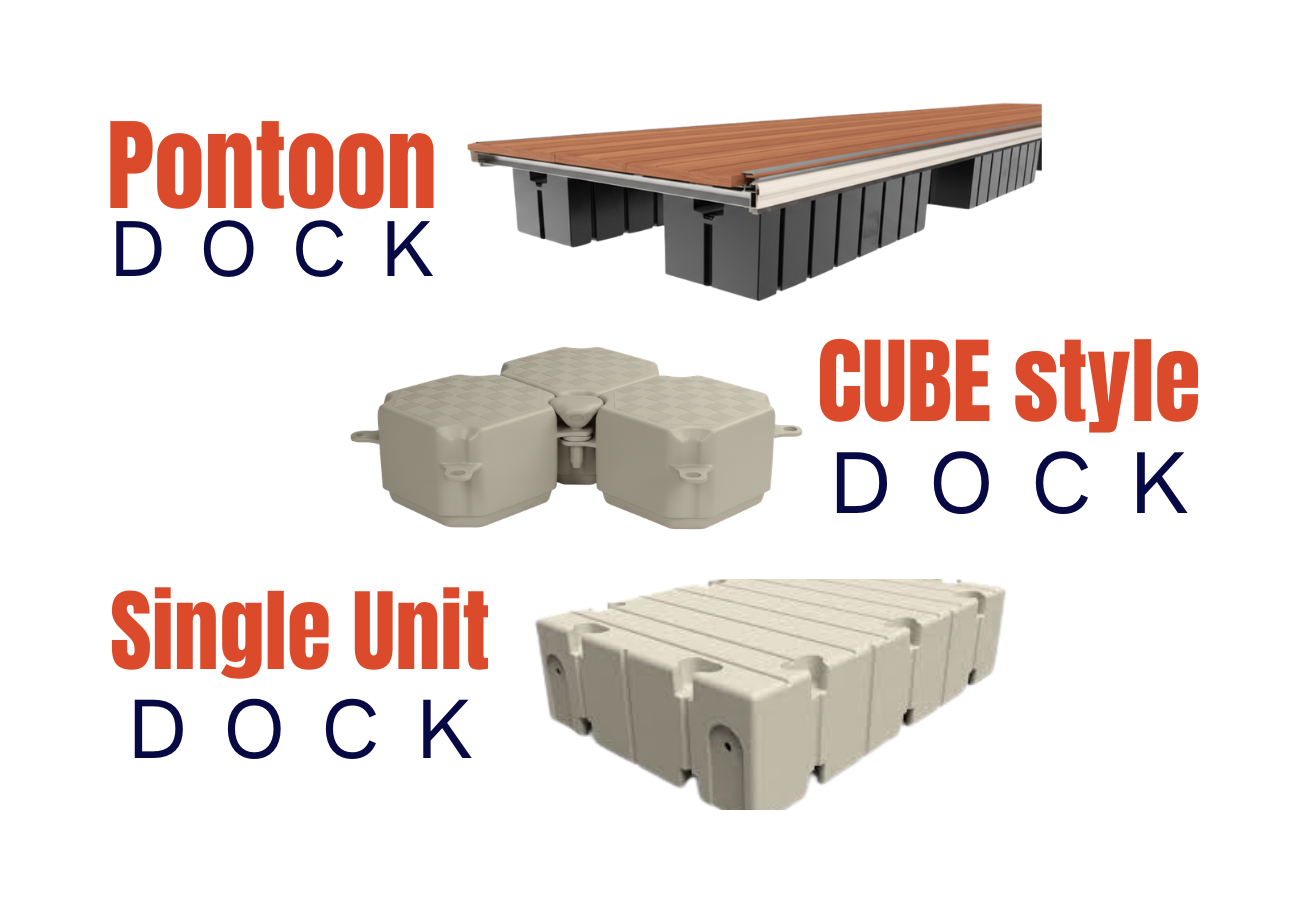
After the environment has had its say, performance and aesthetics are next. Floating dock types offer different capabilities and feel on the water. Each dock type approaches stability, watercraft, depth change and environmental conditions, differently.
Dock type choice will affect capacity, wake management, water stance, assembly and more.
DOCK
TYPES
Consider these..
■ SINGLE MOULD (integrated flotation)
Single-mould docks with integrated flotation are regarded as the most stable when it comes to managing water stance regardless of platform size.
This Dock Type excels at:
Stability, Water Stance & Assembly and Removals
■ PONTOON (external flotation)
Pontoon dock (external flotation) systems are generally employed for large scale platforms requiring large weight capacity. This dock type is not used in situations where the dock will be moved, scaled or reconfigured.
This Dock Type excels at:
Weight Capacity, Platform Deck Options,
■ CUBE (standardized units)
Cube dock systems use one size standardized building blocks. These cubes provide exceptional versatility when it comes to platform layout design.
This Dock Type excels at:
A-typical Designs, Flexibility

Durability ■ Expansion ■ Lifespan
Now that you’re clear on platform layouts, anchoring and dock type, it’s time to future-proof this investment. Floating dock systems are significant expenditures that should be made with longevity in mind.
Floating docks can last for decades if they are matched to the appropriate environment and application. They must also be maintained and used with care.
DOCK
DURABILITY
Modern polyethylene floating dock systems are exceptionally durable for the environments they inhabit. While no dock system is immune to the impact of the environment, polyethylene floating docks resistance to disintegration far exceeds traditional fixed docks.
The main reason is that floating docks are designed to work with the environment rather than trying to withstand its forces.
What Makes Floating Docks Durable?
HDPE and LLDPE docks are resistant to environmental disintegration.
Many floating dock brands are unsinkable, even after taking on water.
Some floating dock systems use wake dispersal technology
Minimal - to no maintenance - and removal capability
Floating dock systems are spared impact by moving as the water does
Floating docks leverage water movement for its own protection
DOCK
EXPANSION
Floating dock systems have the added advantage to grow with future waterfront demands. Floating docks provide the freedom to redesign your waterfront each year to adjust for changing needs. While expanding a stationary dock may require professionals and added cost, you can add sections to a floating dock system in minutes - with minimal equipment.
Floating Dock Expansion Flexible Future-Proofing
Floating dock sections can be disconnected or added without water entry
A dock section can be floated to the dock and connected in minutes
Floating Docks allow you to build a waterfront as the need arises
Floating docks empower the DIY’er with options and no need to hire help
Floating docks allow for right-sizing during the season. Boat ports may be removed when the watercraft have gone to storage, while the remaining platform can stay in place until the season’s end.
DOCK
LIFESPAN
Floating docks manufactured with strong polyethylene and shock absorbing connectors have a proven lifespan measured in decades. These floating dock systems are constructed with elements that resist corrosion and the damaging effects of Ultra-Violet rays.
Modern polyethylene floating dock systems do not endure the type of extensive impact felt by fixed docks.
What is the Lifespan of Floating Docks?
Top engineered polyethylene floating docks have a 15-45 year lifespan
Minimal but necessary yearly maintenance (cleaning) extends life
The type of polyethylene, design and construction method play key roles
LIfespan refers to the dock sections - anchoring may need to be upgraded sooner