
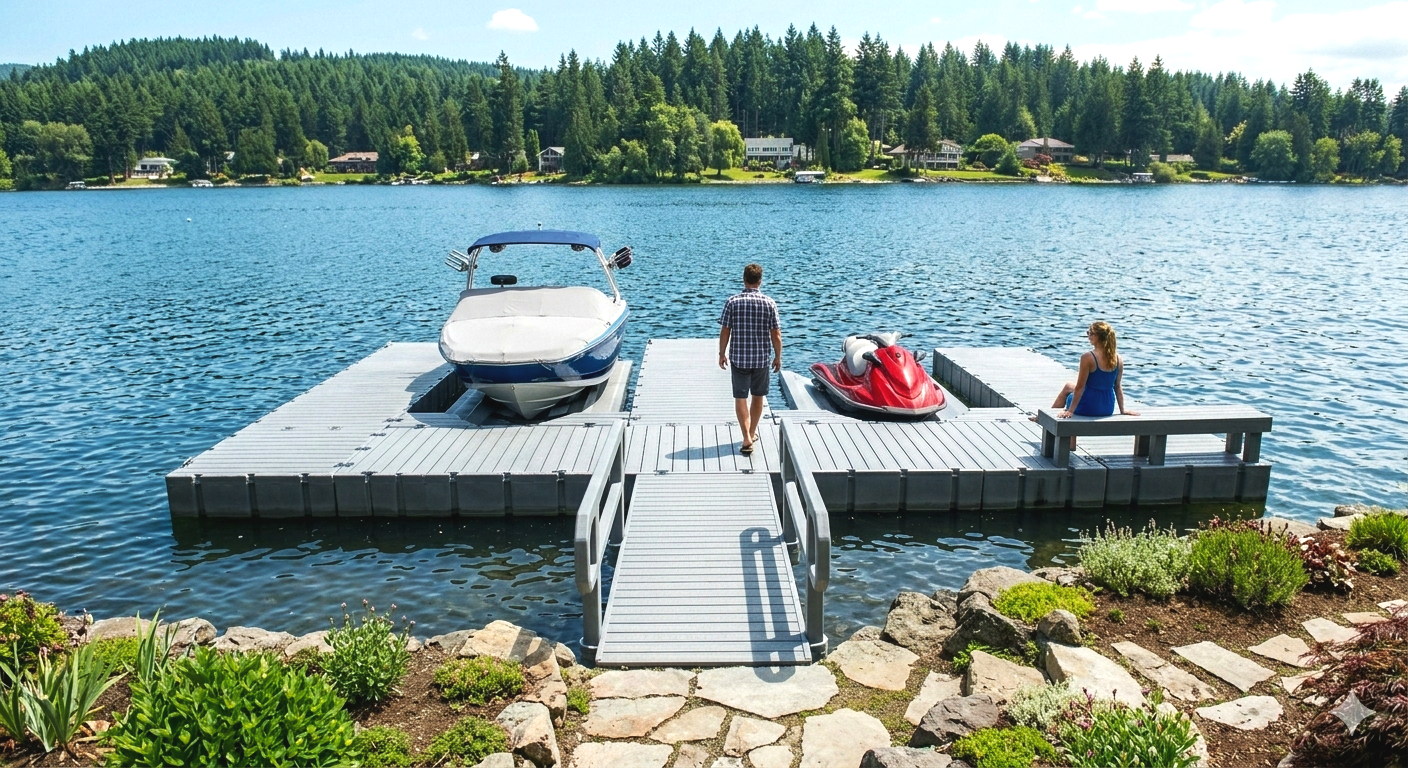

How does a floating dock actually work?
The simple answer is - gravitational force, displacement and pressure.
We’ve compiled the most common ‘How it Works’ floating dock questions to help you envision the on-water performance.
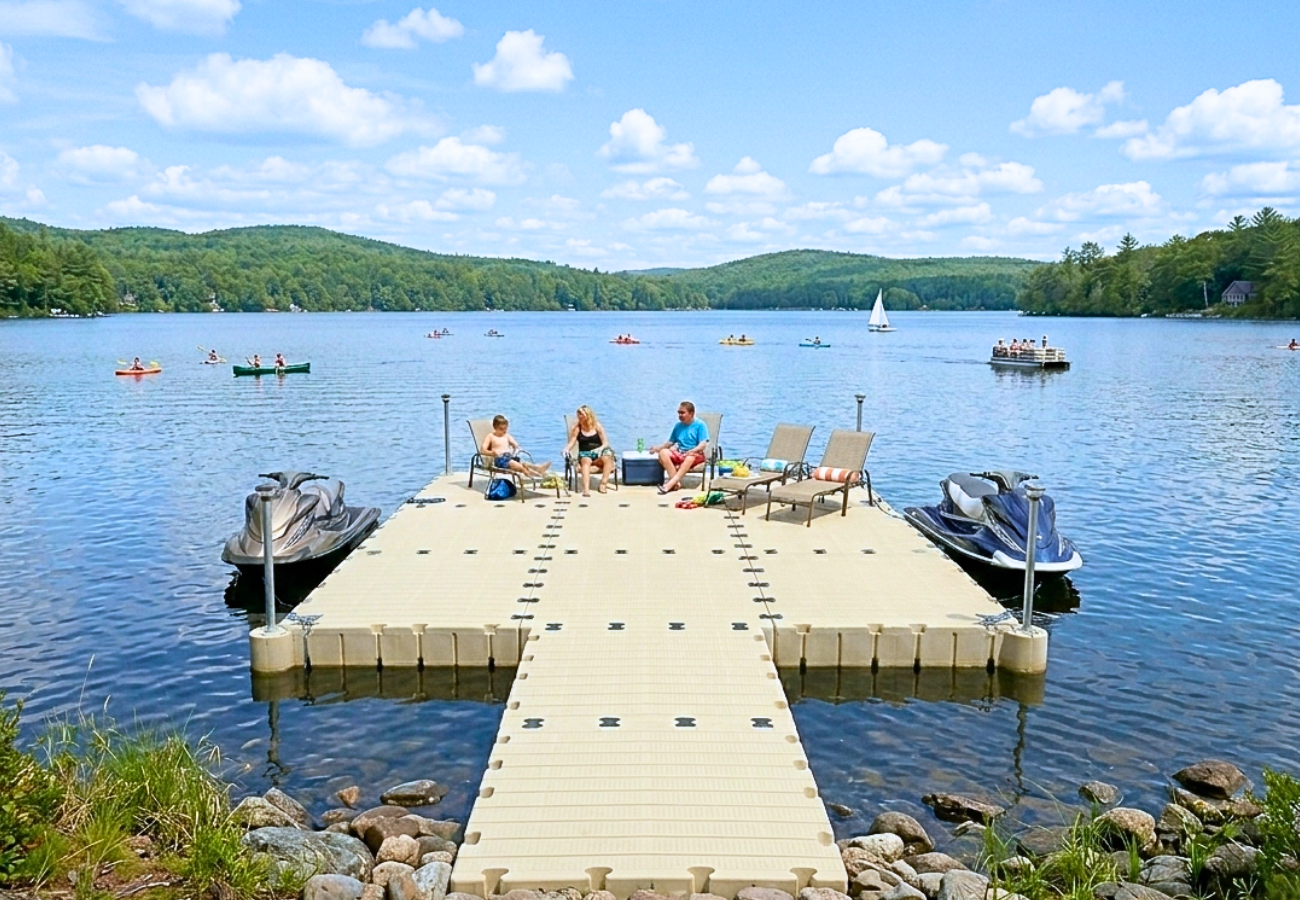
How do Floating Docks Work?
A floating dock consists of a buoyant platform with (integrated or external) flotation connected to a flexible anchoring system (typically pipes). The posts are driven into the lake bed below, and affixed to the platform via brackets. When the water level changes the platform slides up or down along the pipes that engage the perimeter of the platform.
-
Yes, Post (pipe) anchoring and shore arm brackets adjust on their own. Dead weight systems must be manually adjusted when the level (tension) changes.
-
All floating dock systems feature 3 functional components that support position, stability and depth change.
Water Stance - How the dock sections float
Active Anchoring - How the dock is anchored
Flexible Connectors - How the platform works together -
The key difference between Floating and Fixed dock systems is the buoyant platform. Floating docks use the posts like a vertical track. When levels fluctuate and change the depth, floating dock platforms will move up or down along the posts.
Are Floating Docks Stable?
Yes. But, this depends on the flotation type, anchoring setup and the dock footprint (size). All floating docks work as part of systems to maintain stability. The dock sections establish the water stance for the platform, the anchor system manages depth, and the connectors insulate the dock against shock. This is the 3 part system that gives floating docks stability.
-
Any floating dock that tips or sways from water movement, wind or foot traffic is not designed with sufficient buoyancy for the job. If you’re standing on a single section of any dock, yes it will tip without the rest of the system. As a set-up platform there should never be tipping or swaying.
-
Floating Dock Stability by Dock Type:
1 .Single-mould (integrated flotation) with air chamber design.
2. Pontoon (external flotation)
3. Standardized (Cube Style) -
As with any product, the cheapest versions of floating docks will not perform as those that have been engineered, tested and refined through R & D. Stability is the one aspect of floating dock design that should not be skimped on.
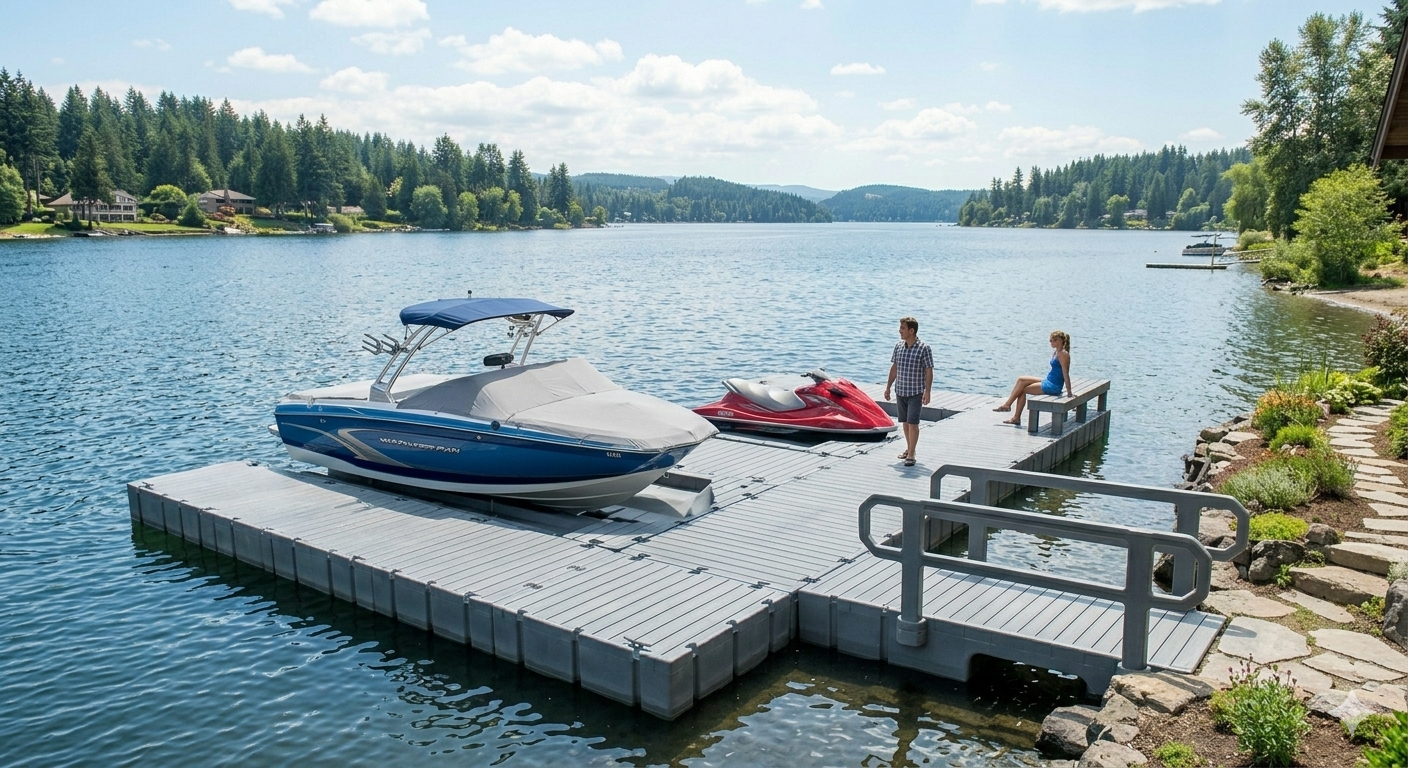
Floating Dock Anchoring
The anchoring of floating docks is what enables the platform to move with control when required. Floating docks sit just beneath the surface in a controlled perimeter outlined by the anchoring. As water levels fluctuate the dock platform’s stance does not change, it simply adjusts its level position along the pipes.
-
Regardless of the terms used: Moorings, Pipes or Posts - these are the most common dock supports. These posts are sheathed by brackets on the side of the dock platform. The posts - affixed with augers - are driven into the water bed to secure the dock position.
-
Floating docks in deep water use ‘Dead Weights’ (typically concrete blocks) on the water bottom with chains extending up to brackets hanging down from the dock. Crisscrossed connections to opposing sides keeps the dock platform balanced against itself.
-
When a floating dock location has a challenging shoreline or uneven underwater topography (varied depths), combination anchoring can be employed. This could mean posts or stiff-arms at the shore and dead weights as the depth deepens.
How Floating Docks FLOAT
Floating docks use the physics of displacement, pressure and upward buoyancy to float. As an object is pushed down into the water by weight (its own or added), it will create an upward force in the space made. This exchange of water for the object’s weight is what creates a dock’s Water Stance.
-
There are two types of flotation dynamics used in floating dock design. Displacement Pressure and Hydro-static Surface pressure. Docks designed with underside chambers engage hydro-static ‘suction’ pressure. Pontoon and Cube docks rely on displacement pressure.
-
Floating docks use:
1. Trapped Air
2. EPS (expanded polystyrene)
Sometimes these are used in combination. Other materials may be used in cheaply made systems (be careful). -
Most floating dock brands feature a capacity between:
50 - 65 lbs/sq ft
23 - 29 kg/sq m
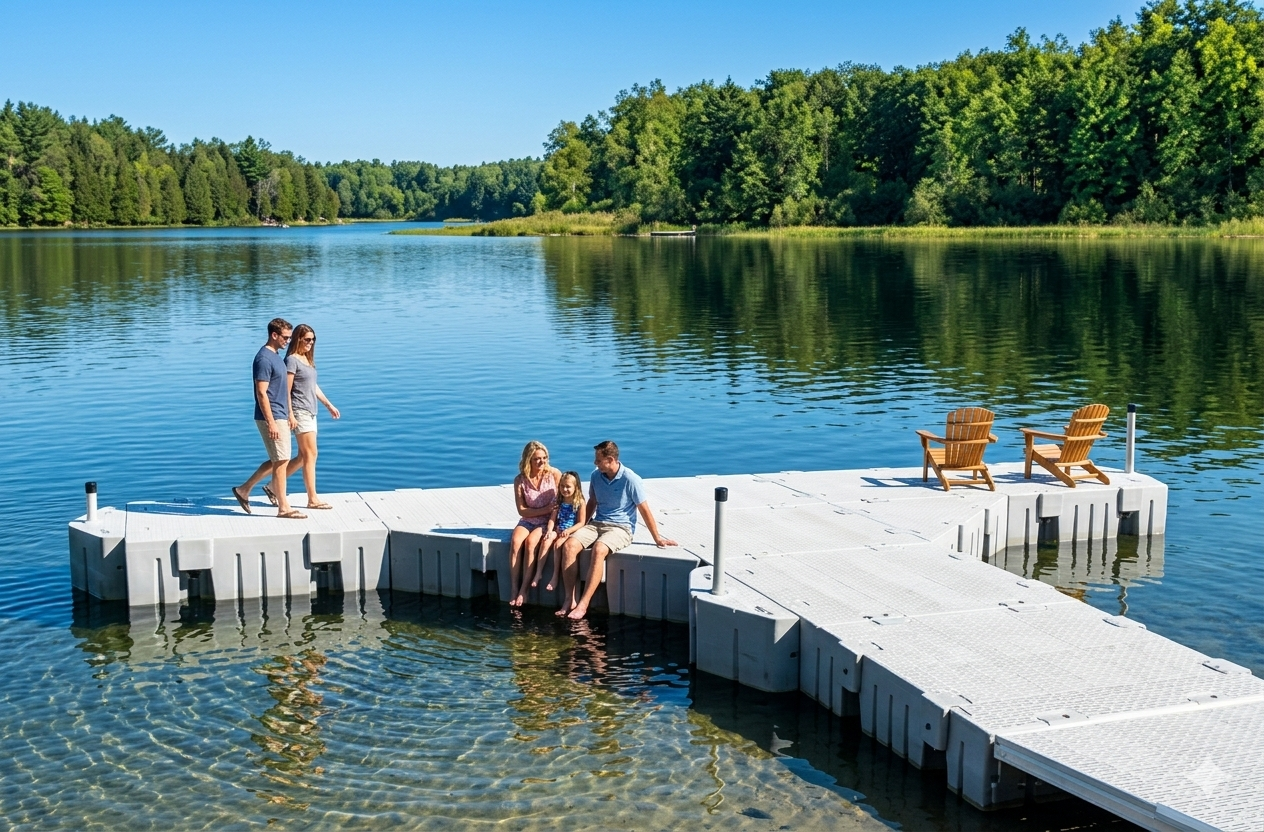
Can Floating Docks Stay in Ice?
The simplest answer here is - only if you’re willing to risk it. When possible docks should not be left in environments with winter conditions. Even if it’s a small body of water with little or no movement or ice? Modern floating dock systems are tough and resilient, but it doesn’t mean they should be put at risk.
-
If you live in a four season environment you should remove the dock for winter. This is the key capability of floating dock design. Pulling out the dock will increase lifespan, improve performance and prevent animal inhabitants.
-
They say it can be left in during winter. Yes, some brands do state this, but be very careful about the verbiage used. Dealing with any insurance or warranty will always benefit the company - not you. Our recommendation remains to always remove your dock at season’s end.
-
Anything you invest in should be receive regular maintenance, that’s just smart business. Floating dock systems should be removed to clean, examine for holes and remove wedged sticks, moss or zebra mussels.
Floating Dock Boat Docking
Watercraft protection is a must for functional floating dock systems. Launching, embarking and drive-on dry dock capability is becoming more sophisticated. Floating docks are designed with boating in mind, from entry and exit, to protection and stowing - the priorities of boat owners everywhere have been addressed.
-
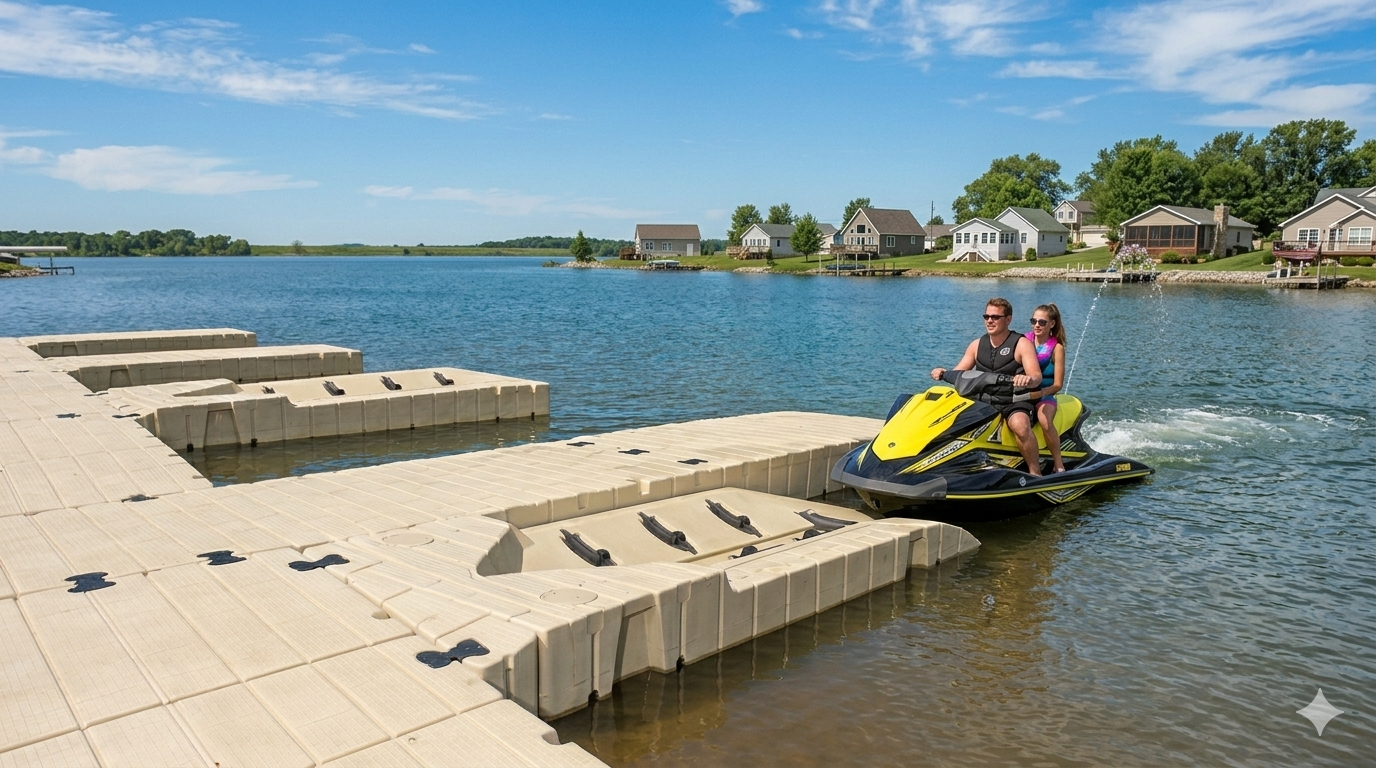
Yes. Most polyethylene floating dock brands have PWC docks with the capability to drive out of the water and onto the dock.
These are called PWC Ports. -
Yes, floating dock systems have drive-on boat ports and lifts. Whether it’s lift or drive on port, each can secure the watercraft out of the water and away from the elements.
-
Polyethylene floating docks are ideal for boat protection. Slip designs intercept and disperse chop. Integrated bumpers and cleat tie-downs keep watercraft from banging against the platform.
Are Floating Dock Durable?
Polyethylene floating docks feature impressive durability designed to resist environmental breakdown. HDPE and LLDPE floating docks feature resin additives that ensure the plastic resists damage caused by water and UV absorption. These stabilizers protect the polymers of floating docks to extend lifespan.
-
Floating docks are designed to maintain flotation even after incurring damage. Even when punctured, floating docks will not fully submerge. They maintain enough flotation to be pulled to the shoreline to be drained.
-
The functional lifespan for polyethylene floating docks is measured in decades. Lifespan depends on the quality of the dock and how it is maintained. Floating docks have been tested on degradation scales that showed breakdown resistance past 50 years.
-
Polyethylene floating docks are engineered with protective additives. These help to resist the damaging effects of the sun, and to seal the dock from exposure. These UV stabilizers in floating docks appear as a rating like: UV-8. Not all dock brands are rated.
Wake & Chop Management
Floating dock systems handle rough water with these 4 key design functions:
Water Stance - Submerged below the surface
Anchor Flex - Keeps the dock moving
Water Channels - Divert moving water
Shock Absorbing - Wake Impact Defence
-
Floating docks do not “sit” or “rest” on the surface, they stand below the surface. This water stance is what keeps them from rocking. Working with flexible anchoring, the dock maintains stability with micro adjustments that keep the platform evenly balanced below the surface.
-
Unlike fixed docks that endure wake, floating dock designs feature pass-through channels. Wake and current is diverted between the dock sections and funnelled out the other side. This diversion of force keeps the dock’s equilibrium undisturbed.
-
Wake impact that is not dispersed via the water channels is handled by the dock section connectors. Connectors keep the sections connected, but with flexible movement. This design element deadens shock before it can impact the dock sections.